Tesla Announces €3 Billion Berlin Gigafactory Expansion for Cybercab Production Starting 2029
The new building at Grünheide is planned to build up to 1 million vehicles a year, with construction expected to begin in the first half of 2027.
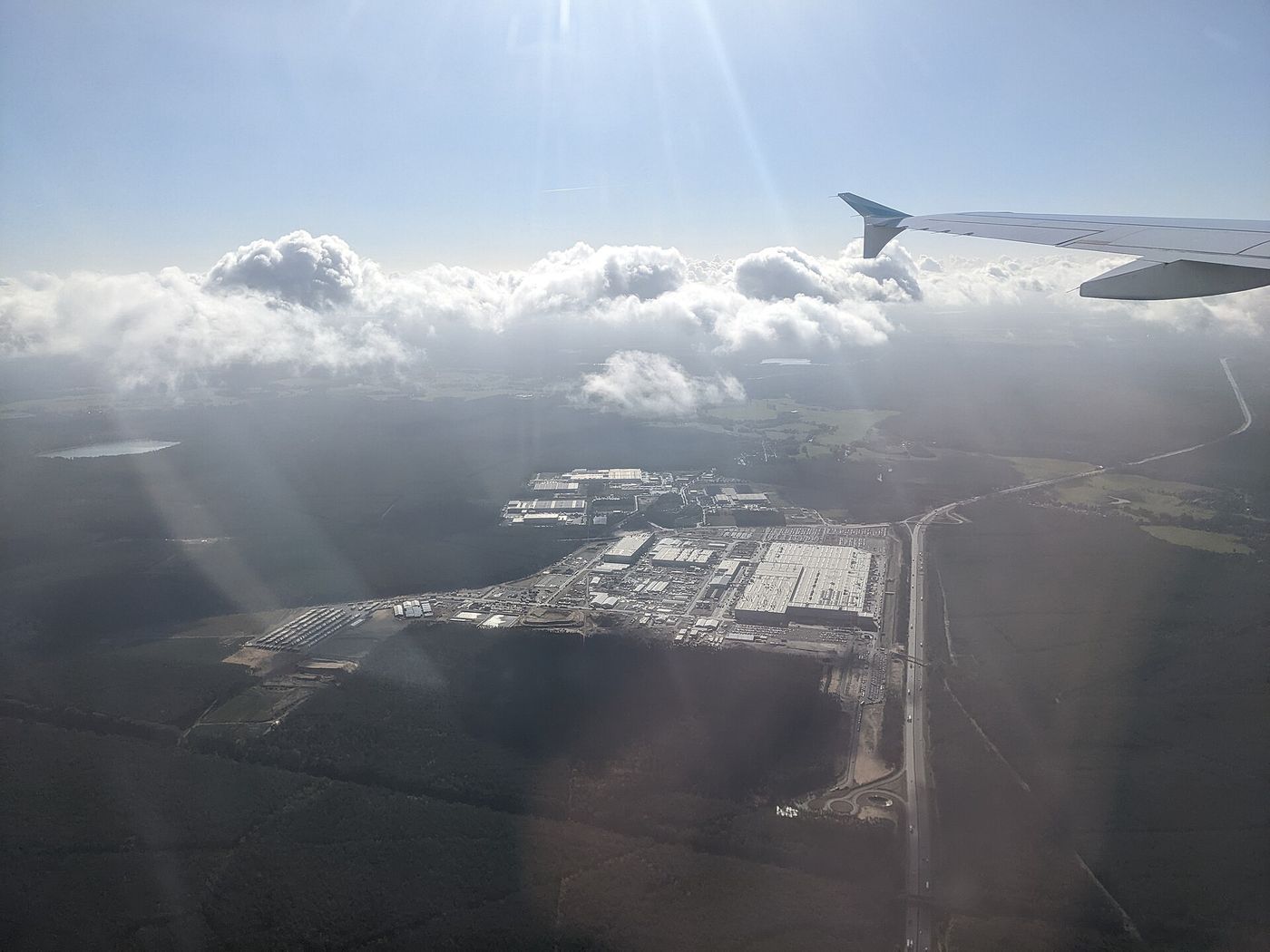
Photo: Elfenbeinturm / CC BY-SA 4.0 via Wikimedia Commons
Tesla said on Monday, November 16, that it will spend €3 billion (about $3.3 billion) expanding its gigafactory in Grünheide, east of Berlin, to build the Cybercab, TechCrunch reported. Cybercab production at the site is planned to start in 2029.
The plan
The new building is designed for capacity of up to 1 million vehicles per year, and construction is expected to begin in the first half of 2027. André Thierig, Tesla's senior director of manufacturing at the site, wrote on LinkedIn that the expansion will make the plant "the most technologically advanced of all Tesla factories."
About the Cybercab
The Cybercab is a two-seat, gold-colored autonomous vehicle with no steering wheel or pedals. Tesla first showed it in 2024 and began offering it to the public in September 2026. According to TechCrunch:
- Federal regulators are investigating Tesla's self-certification of the vehicle
- Tesla relies on cameras alone rather than lidar, which rivals such as Waymo use
- Cybercabs are barred from driving late at night, and Tesla is working to extend their hours
- No major incidents have been reported in more than two months of operation
- About 573 Cybercabs are on the road in Austin, Texas, with Dallas expected next
Context
Tesla plans to end Cybertruck production in 2027, in part to free space at its Austin factory for Cybercab manufacturing. The company delivered more than 486,000 vehicles in the third quarter of 2026, roughly 6,000 more than in the second quarter. TechCrunch reported that about 1,307 Tesla robotaxis are registered in Texas, most of them modified Model Y vehicles.