HPE Unveils First Four ProLiant Gen13 Servers Built on AMD's 'Venice' EPYC Chips
The lineup adds PCIe Gen6 and a new iLO 8 management processor, with shipments staggered from late 2026 into 2027.
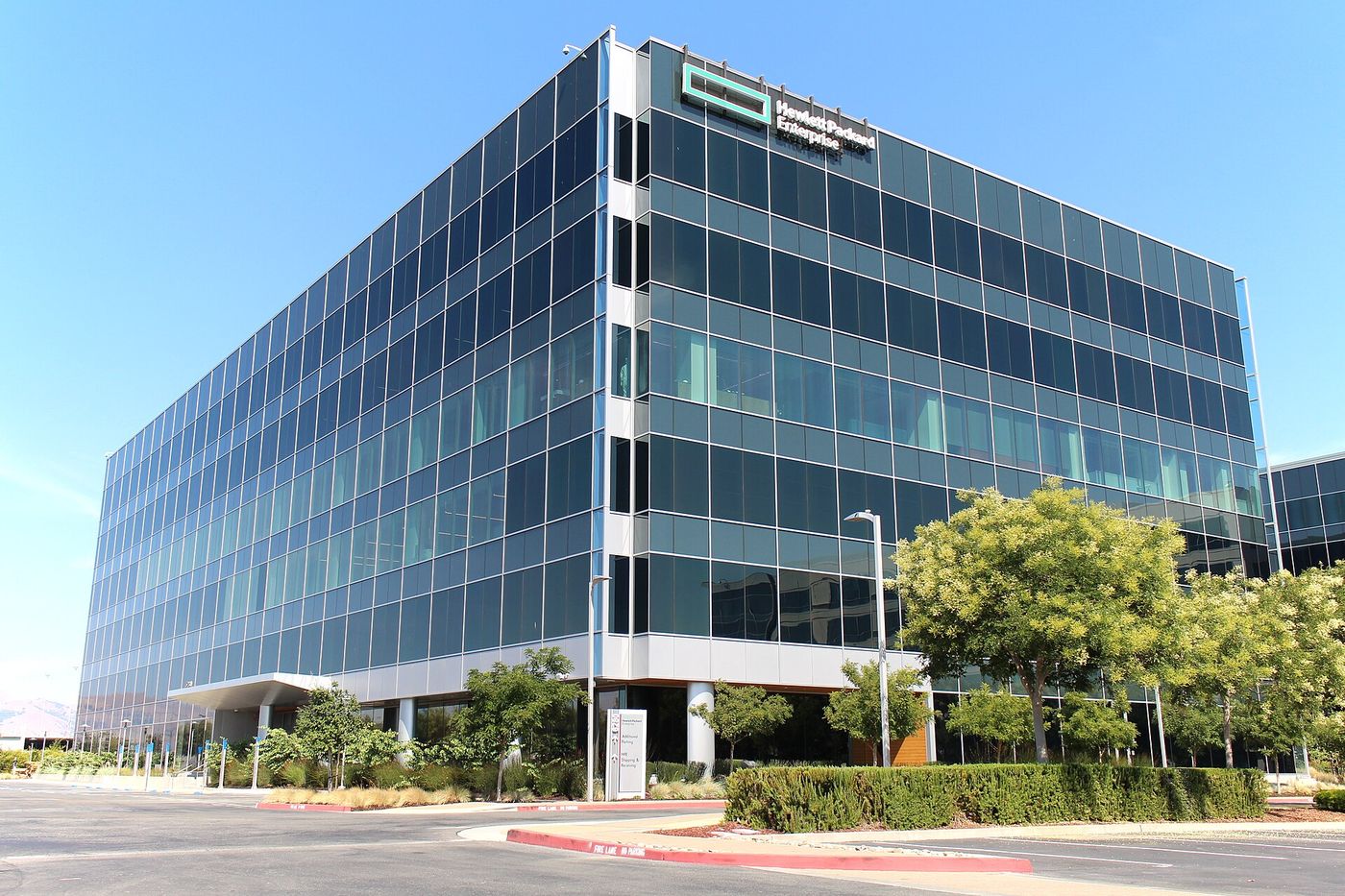
Photo: Coolcaesar / CC BY-SA 4.0 via Wikimedia Commons
Hewlett Packard Enterprise announced its first four ProLiant Gen13 servers on October 7, all built around AMD's 6th-generation EPYC "Venice" processors, according to StorageReview.
The four systems
- DL585a Gen13: a 10U air-cooled, two-socket server that takes up to eight double-wide GPUs or 16 single-wide liquid-cooled cards. It has 32 DIMM slots, up to 8TB of DDR5 memory and up to 16 E3.S drives, and ships without embedded networking.
- DL525 Gen13: a 1U single-socket system with up to 256 cores at 600W, 16 memory channels and up to 20 E3.S drives, available with air or direct liquid cooling.
- XD245 Gen13: a 2U Open Compute (ORV3) chassis holding four direct liquid-cooled two-socket nodes.
- XD285 Gen13: the same 2U chassis with two air-cooled two-socket nodes.
Platform features
All four use PCIe Gen6 and HPE's new iLO 8 management processor. According to StorageReview's summary, iLO 8 adds automatic drive encryption, two-person approval for destructive actions and broader post-quantum cryptography support.
For the DL585a, the launch GPU options listed are Nvidia's RTX PRO 6000 Blackwell Server Edition and the RTX PRO 6000D. HPE has indicated that other accelerators, including Nvidia Rubin PCIe and AMD GPUs, are planned.
Availability
HPE's release gives staggered timing, per StorageReview:
- DL525: later in 2026 (an HPE executive said November)
- DL585a: early 2027
- XD245 and XD285: 2027
All four will be offered through HPE Financial Services' 90/9 Advantage program. No date has been announced for a mainstream two-socket Gen13 model, and pricing was not given in the report.
Why it matters
The servers show how AMD's next data-center CPU generation is reaching enterprise buyers through major OEMs. HPE is positioning the DL585a for inference, virtualization, fine-tuning and agentic AI workloads, while the Open Compute designs target large-scale and liquid-cooled deployments.